Tel: +86-513-88779999
Email: [email protected]
Buying a distribution transformer for an international project involves more than comparing product prices. Buyers must confirm technical compatibility, evaluate the manufacturer, review testing requirements, and plan shipping and after-sales support.
Whether you are purchasing a transformer for a utility network, industrial facility, commercial development, or renewable energy project, a structured procurement process can help reduce technical and commercial risks.
This guide explains how to buy a distribution transformer and what international buyers should check before placing an order.
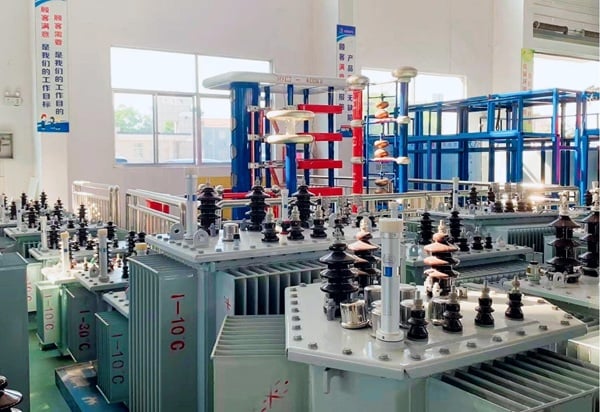
Start by defining the project application.
Common distribution transformer applications include:
Utility power distribution
Industrial facilities
Commercial buildings
Infrastructure projects
Solar power plants
Renewable energy substations
Rural electrification
Residential distribution networks
The application affects transformer type, voltage, capacity, cooling, installation, protection, and testing requirements.
Also identify the destination country and the local grid requirements.
Different transformer designs serve different applications.
Oil-immersed transformers use insulating liquid for electrical insulation and heat transfer. They are widely used in utility distribution, outdoor substations, and industrial power systems.
Dry-type transformers use solid insulation and air cooling. They are commonly considered for indoor substations, commercial buildings, and selected industrial applications.
Pole-mounted transformers are designed for overhead distribution systems. The final configuration depends on the network voltage, capacity, and local utility requirements.
Pad-mounted transformers are designed for ground-level installation and are commonly used in underground distribution networks and certain commercial or industrial applications.
A prefabricated substation integrates selected electrical equipment into a compact factory-assembled arrangement. Its configuration depends on the project design and local standards.
The transformer type should be selected according to the installation environment and electrical system rather than price alone.
Before requesting quotations, prepare a transformer datasheet or RFQ.
Important parameters include:
Rated capacity in kVA or MVA
Primary and secondary voltage
Frequency: 50Hz or 60Hz
Number of phases
Vector group
Percentage impedance
Tap range and tap changer type
Cooling method
No-load loss
Load loss
Insulation level
Temperature-rise requirements
Accessories
Applicable standards
Installation conditions
If you do not have a complete specification, provide the existing transformer nameplate, single-line diagram, or project description.
Selecting a reliable transformer manufacturer is an important part of procurement.
Review the manufacturer's production facilities, engineering team, testing equipment, and ability to produce the required transformer type and rating.
Ask how the manufacturer manages material inspection, core and winding production, assembly, drying, tank fabrication, oil processing where applicable, and final testing.
A capable supplier should be able to review the technical specification, clarify missing parameters, and provide drawings and datasheets for approval.
International orders may require export packaging, customs documentation, shipping coordination, and destination-specific technical documents.
Ask about warranty coverage, spare parts, technical support, and the process for handling product issues.
A factory visit, video inspection, reference project, or third-party inspection may provide additional information during supplier evaluation.
Distribution transformer prices vary according to technical and commercial requirements.
Major price factors include:
Rated capacity: Larger transformers generally require more materials and manufacturing resources.
Voltage class: Higher voltage requirements can affect insulation design and construction.
Core and winding materials: Material selection and design influence cost and performance.
Loss guarantees: Lower guaranteed losses may require different materials and design optimization.
Impedance: Project-specific impedance requirements may affect the design.
Tank and enclosure: Tank construction, protection level, and accessories influence the quotation.
Testing and inspection: Additional tests, witnessed FAT, and third-party inspection may add cost.
Customization: Special environmental, electrical, or installation requirements can affect engineering and manufacturing costs.
Packaging and delivery: Export packaging, transportation, insurance, and Incoterms affect the total delivered cost.
For a fair comparison, request quotations based on the same technical specification and delivery scope.
Before production, agree on the applicable standards and testing scope.
Typical transformer routine tests may include:
Winding resistance measurement
Voltage ratio measurement
Check of phase displacement and vector group
Short-circuit impedance and load loss measurement
No-load loss and current measurement
Dielectric tests
Depending on the project, type tests, special tests, or third-party inspection may also be required.
A Factory Acceptance Test (FAT) is an inspection and testing process carried out before shipment according to the agreed purchase specification.
The buyer should confirm:
Test scope
Test standards
Acceptance criteria
Witness arrangements
Required test reports
Inspection schedule
Not every project requires the same FAT scope. It should be defined in the contract or approved technical documents.
For international procurement, confirm the shipping arrangement before production is completed.
Common commercial and shipping documents may include:
Commercial Invoice
Packing List
Bill of Lading
Certificate of Origin, where applicable
Technical datasheet
Approved drawings
Factory test reports
Operation and maintenance manual
Warranty documentation
The exact document list depends on the destination country, customs requirements, contract, and project specification.
Buyers should also confirm packaging, shipping dimensions, gross weight, lifting arrangements, and any special transportation restrictions.
Before placing an order, review the warranty terms in writing.
Confirm:
Warranty start date
Warranty duration
Covered defects
Exclusions
Required operating conditions
Spare parts availability
Technical support arrangements
Procedures for reporting product issues
A clear warranty agreement helps both the buyer and manufacturer understand their responsibilities.
International buyers should avoid the following mistakes:
Selecting capacity without checking the actual load.
Providing incomplete voltage or frequency information.
Ignoring impedance and vector group requirements.
Comparing prices without comparing guaranteed losses.
Assuming all suppliers include the same accessories.
Failing to confirm the applicable standards.
Not agreeing on factory testing and inspection.
Overlooking export packaging and shipping requirements.
Not reviewing drawings before production.
Choosing a supplier based only on the lowest quotation.
The price depends on capacity, voltage, design, materials, losses, impedance, accessories, testing, customization, and delivery terms. A complete technical specification is necessary for an accurate quotation.
Manufacturing lead time depends on the transformer rating, design complexity, material availability, order quantity, and production schedule. Confirm the estimated delivery date with the manufacturer after technical approval.
Common documents include the commercial invoice, packing list, bill of lading, applicable certificate of origin, technical datasheet, drawings, test reports, and operation and maintenance manual. Destination-specific requirements should be checked before shipment.
Review its factory capabilities, engineering resources, quality control, testing equipment, product documentation, export experience, and customer references. A factory inspection or third-party audit may provide additional assurance.
Customization may be possible for voltage, capacity, impedance, vector group, losses, accessories, tank construction, and environmental conditions, subject to technical feasibility and applicable standards.
Jiangsu Dingxin Electric manufactures power transformers and related electrical equipment for utility, industrial, infrastructure, and renewable energy applications.
For international projects, buyers can provide their technical specifications, single-line diagrams, or existing equipment details for review.
To request a quotation, include:
Transformer type and quantity
Rated capacity
Primary and secondary voltage
Frequency
Impedance and vector group
Required standards and tests
Project destination
Target delivery schedule
Contact Dingxin Electric to discuss your distribution transformer procurement requirements and request a project quotation.

Jiangsu Dingxin Electric, a high-tech power equipment manufacturer, produces high-quality transformers and substations, serving global markets across 30+ countries.
Room 118, Building 8, 2999 Hutai Road, Baoshan District, Shanghai, China


Copyright © Jiangsu Dingxin Electric Co., Ltd. All Rights Reserved | Privacy Policy
 EN
