Tel: +86-513-88779999
Email: [email protected]
Choosing the right oil-immersed transformer requires more than selecting a rated capacity. Buyers should evaluate voltage, frequency, impedance, losses, cooling, tank construction, installation conditions, testing requirements, and the manufacturer's technical capabilities.
A suitable transformer should match the electrical network, operate reliably under the expected load, and meet the project's applicable standards.
This oil-immersed transformer buying guide explains the main factors international buyers should review before placing an order.
Start by identifying the transformer's application.
Typical applications include:
Utility distribution networks
Industrial power distribution
Commercial facilities
Infrastructure projects
Solar power plants
Renewable energy substations
Rural and urban distribution systems
The application determines the required capacity, voltage ratio, installation arrangement, protection, and environmental design.
Before requesting a quotation, identify the project country, grid voltage, frequency, installation location, and expected load.
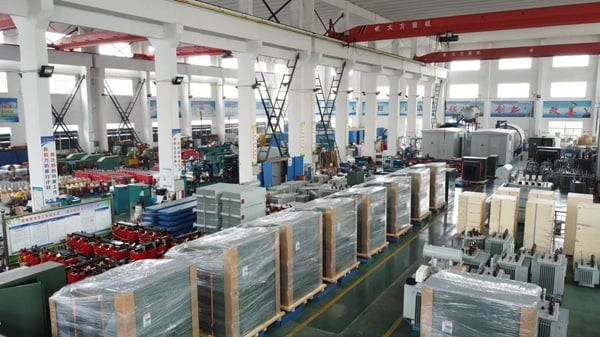
Transformer capacity is normally expressed in kVA or MVA.
The required rating depends on the load that the transformer must supply.
When calculating the required capacity, consider:
Total connected load
Maximum demand
Power factor
Load diversity
Motor starting current
Non-linear loads
Future expansion
Required operating reserve
Undersizing a transformer may result in excessive loading and reduced operating margin. Oversizing may increase initial cost and can affect operating efficiency under light-load conditions.
A proper load assessment should be completed before selecting the rated capacity.
The transformer voltage ratio must match the electrical distribution system.
For example, a transformer may be specified for a 10 kV primary and 0.4 kV secondary. Other networks may require 11 kV, 20 kV, or 33 kV primary voltage.
Buyers should confirm:
Rated high voltage
Rated low voltage
Neutral arrangement
Insulation level
Tap range
Grounding requirements
Do not assume that two transformers are interchangeable simply because their rated capacity is identical.
Transformer frequency must be compatible with the power network.
A 50Hz transformer and a 60Hz transformer may require different design considerations, depending on voltage and magnetic flux density.
Always state the required frequency in the RFQ and confirm it in the final technical datasheet.
Transformer losses affect electricity consumption throughout the operating life of the equipment.
Two important parameters are no-load loss and load loss.
No-load loss occurs when the transformer is energized, even when it supplies little or no load. It is mainly associated with the transformer core.
Load loss is mainly associated with current flowing through the windings and other load-related effects.
When comparing different transformer models, request guaranteed no-load and load loss values under the same rated capacity, voltage, frequency, and test conditions.
A transformer with a higher purchase price may offer lower operating costs if its guaranteed losses are sufficiently lower and the operating profile justifies the investment.
For a fair comparison, consider the expected load profile, annual operating hours, electricity price, and project evaluation period.
Transformer impedance affects voltage regulation and short-circuit current.
A higher impedance generally reduces the short-circuit current contributed by the transformer, while a lower impedance generally allows a higher current under otherwise equal conditions.
The required value should be coordinated with:
Upstream system fault level
Downstream switchgear
Protection settings
Cable and busbar ratings
Parallel transformer operation
If the transformer will operate in parallel with an existing unit, the electrical designer should verify impedance compatibility, voltage ratio, vector group, and other operating conditions.
Oil-immersed transformers may use conservator-type or fully sealed tank designs.
A conservator-type design uses a separate oil reservoir to accommodate changes in insulating-liquid volume as temperature changes.
The exact arrangement and accessories depend on the design.
A fully sealed transformer is designed to isolate the insulating liquid from direct contact with the outside atmosphere.
Some distribution transformers use corrugated tank walls that accommodate thermal expansion and contraction of the insulating liquid.
When evaluating a fully sealed design, buyers should check:
Tank construction
Sealing arrangement
Pressure relief device
Oil expansion design
Applicable operating conditions
Manufacturer's maintenance instructions
The terms "fully sealed" and "maintenance-free" should not replace a review of the manufacturer's actual maintenance requirements.
ONAN cooling is commonly used in oil-immersed distribution transformers.
It means Oil Natural Air Natural: the insulating liquid circulates naturally inside the tank, and heat is dissipated naturally to the surrounding air.
For higher ratings or specific operating conditions, other cooling arrangements may be available.
Confirm the cooling method in the technical specification, together with any required ambient temperature and temperature-rise limits.
The required accessories depend on transformer design, rating, and project specification.
Possible accessories include:
Oil level indicator
Oil temperature indicator
Winding temperature indicator
Pressure relief device
Gas relay
Drain and sampling valves
HV and LV bushings
Off-circuit tap changer
Earthing terminals
Lifting and handling accessories
Ask the manufacturer to provide an accessory list and confirm which items are included in the quoted price.
Before ordering, identify the governing transformer standard and the required test scope.
Depending on the project, relevant requirements may reference IEC 60076, IEEE C57 series, or applicable national and utility specifications.
Typical routine tests include:
Winding resistance measurement
Voltage ratio and phase displacement verification
Short-circuit impedance and load loss measurement
No-load loss and current measurement
Dielectric routine tests
Additional type tests, special tests, or third-party inspections may be required by the buyer or project consultant.
Request the test schedule and confirm whether the buyer can witness the factory tests.
A reliable transformer supplier should be evaluated on more than the quoted price.
Review the following:
Manufacturing capability: Check whether the company has the production facilities and equipment required for the specified transformer.
Engineering support: Confirm whether the technical team can review drawings, specifications, and project requirements.
Quality control: Ask about incoming material inspection, in-process checks, final inspection, and factory testing.
Technical documentation: Confirm that datasheets, drawings, test reports, and operation manuals can be supplied as agreed.
Export experience: Check whether the manufacturer understands export packaging, shipping documentation, and destination requirements.
After-sales support: Review warranty conditions, spare parts, and technical assistance.
Avoid these common procurement problems:
Selecting capacity without a load assessment
Providing incomplete voltage information
Ignoring frequency requirements
Failing to specify impedance
Comparing loss values from different test conditions
Overlooking installation temperature and altitude
Assuming every accessory is included
Not confirming the testing scope
Comparing quotations with different technical specifications
Failing to review the approved drawings before production
Start with the application and load calculation. Then confirm capacity, voltage ratio, frequency, impedance, vector group, losses, cooling, installation conditions, standards, and accessories.
Price depends on rated capacity, voltage, core and winding materials, guaranteed losses, impedance, tank design, accessories, testing requirements, customization, and delivery terms.
Service life depends on design, materials, loading, temperature, maintenance, operating environment, and the condition of the insulation system. Follow the manufacturer's operating and maintenance guidance.
A conservator-type transformer uses a separate reservoir to accommodate liquid expansion. A fully sealed design uses a sealed tank arrangement, with the specific expansion method determined by the design.
Review the nameplate, approved drawings, visual condition, accessory list, test reports, packaging, and all agreed technical requirements. Follow the manufacturer's commissioning instructions before energization.
Jiangsu Dingxin Electric provides oil-immersed transformer solutions for utility distribution, industrial power systems, infrastructure, and renewable energy applications.
Dingxin's S13-M fully sealed oil-immersed distribution transformer range covers 30 kVA to 2500 kVA, with multiple voltage and connection configurations listed in the product specifications.
For a project-specific recommendation, provide your required capacity, voltage ratio, frequency, impedance, installation conditions, and applicable standards.
Contact Dingxin Electric to discuss your oil-immersed transformer requirements and request a quotation.

Jiangsu Dingxin Electric, a high-tech power equipment manufacturer, produces high-quality transformers and substations, serving global markets across 30+ countries.
Room 118, Building 8, 2999 Hutai Road, Baoshan District, Shanghai, China


Copyright © Jiangsu Dingxin Electric Co., Ltd. All Rights Reserved | Privacy Policy
 EN
