Tel: +86-513-88779999
Email: [email protected]
Tel: +86-513-88779999
Email: [email protected]
Understanding oil-immersed transformer specifications is essential before purchasing a distribution transformer for a utility, industrial, commercial, or renewable energy project.
A transformer datasheet contains more than rated capacity and voltage. It also defines frequency, impedance, vector group, losses, cooling method, insulation level, temperature rise, accessories, and testing requirements.
For overseas buyers, reviewing these parameters before requesting a quotation helps avoid technical mismatches, unnecessary design changes, and delivery delays.
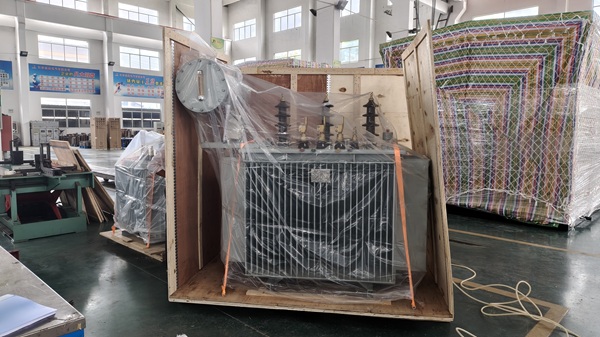
Rated capacity is normally expressed in kilovolt-amperes (kVA) or megavolt-amperes (MVA).
It indicates the transformer's rated apparent power under specified operating conditions.
Common distribution transformer ratings include 100 kVA, 250 kVA, 315 kVA, 500 kVA, 630 kVA, 800 kVA, 1000 kVA, 1250 kVA, 1600 kVA, and 2000 kVA. Actual standard ratings vary by manufacturer, voltage class, and applicable standard.
When selecting capacity, buyers should consider:
Total connected load
Maximum demand
Load power factor
Load diversity
Motor starting or other transient loads
Future expansion
Required standby or redundancy arrangements
A transformer should not be selected solely by adding the nameplate ratings of all connected equipment. A proper load assessment is needed to determine the required capacity.
The voltage ratio defines the relationship between the transformer's high-voltage and low-voltage windings.
For example, a distribution transformer may be designed for a 10 kV primary voltage and a 0.4 kV secondary voltage. Other systems may use 11 kV, 20 kV, or 33 kV on the high-voltage side, depending on the local distribution network.
Buyers should confirm:
Rated primary voltage
Rated secondary voltage
Highest voltage for equipment (Um), where specified
Insulation level
Tap range
Connection arrangement
System grounding requirements
Do not assume that a transformer designed for a 10 kV network can be used directly on an 11 kV network. The rated voltage and insulation requirements must match the actual system.
Transformer frequency must match the power system.
The most common distribution frequencies are 50Hz and 60Hz. Frequency affects magnetic flux density, core design, losses, and operating performance.
When requesting a quotation, specify the exact operating frequency. Do not rely on a supplier to infer it from the destination country alone.
A transformer designed for one frequency should not be assumed suitable for another without checking the manufacturer's design and rating conditions.
Transformer impedance is usually expressed as a percentage (%Z).
It affects voltage regulation and the short-circuit current available at the transformer terminals.
For overseas projects, buyers should provide the required impedance if it is specified by the utility, consultant, or project design.
Engineers should consider:
Rated capacity
Voltage ratio
System short-circuit level
Downstream switchgear ratings
Protection coordination
Parallel operation requirements
A transformer with a different impedance from the project requirement may affect fault-current calculations and load sharing.
The vector group identifies the winding connection and phase displacement between the high-voltage and low-voltage sides.
Common distribution transformer vector groups include Dyn11 and Yyn0. Other arrangements may be required depending on the system grounding and network design.
The correct vector group is important for:
Compatibility with the distribution network
Neutral availability and grounding
Phase relationships
Parallel operation
Protection and measurement arrangements
Buyers should confirm the required vector group in the technical specification rather than selecting it based only on common market practice.
Transformer losses affect operating cost and energy efficiency.
No-load loss is the power consumed by the transformer when it is energized at rated voltage and frequency, with the secondary winding open under the specified test conditions.
It is mainly associated with the magnetization of the core.
No-load loss occurs whenever the transformer remains energized, even when the load is very low.
Load loss is mainly associated with winding resistance and other load-related effects. It is measured under specified test conditions and normally corrected to the reference temperature required by the applicable standard.
Load loss changes with the current carried by the transformer.
When comparing transformer quotations, buyers should request guaranteed no-load and load loss values for the same rated capacity, voltage, frequency, and applicable standard.
ONAN stands for Oil Natural Air Natural.
It describes a cooling arrangement in which insulating liquid circulates naturally inside the transformer and heat is dissipated naturally to the surrounding air.
ONAN cooling is commonly used in oil-immersed distribution transformers.
Other cooling arrangements may be used for different transformer designs and ratings. Buyers should confirm the cooling class stated in the technical datasheet.
Insulation requirements depend on the system voltage and applicable standards.
The technical specification may include:
Power-frequency withstand voltage
Lightning impulse withstand voltage
Insulation level of each winding
Neutral insulation requirements
Temperature-rise limits
Temperature rise is related to the heat generated inside the transformer and the effectiveness of the cooling design.
For projects in hot climates or at high altitudes, buyers should provide the actual site conditions so the manufacturer can evaluate any required design adjustments.
Oil-immersed transformers may use different tank constructions, including conservator-type and fully sealed designs.
The tank design affects oil expansion arrangements, sealing, inspection, and maintenance procedures.
Depending on the design and rating, accessories may include:
Oil level indicator
Oil temperature indicator
Winding temperature indicator
Pressure relief device
Gas relay
Drain and sampling valves
HV and LV bushings
Off-circuit tap changer
Lifting lugs and wheels
Not every accessory is standard on every transformer. Buyers should confirm the required accessory list in the quotation and approved drawings.
Before delivery, the manufacturer should perform the tests required by the agreed technical specification and applicable standard.
Typical routine tests for power transformers under the relevant IEC 60076 framework include:
Winding resistance measurement
Voltage ratio measurement and check of phase displacement
Short-circuit impedance and load loss measurement
No-load loss and current measurement
Dielectric routine tests
Tests of the transformer's insulation and accessories as applicable
Additional type or special tests may be required by the project specification.
Buyers should confirm whether factory testing, witnessed testing, third-party inspection, and formal test reports are included in the order.
Dingxin's published S13-M fully sealed oil-immersed distribution transformer specifications include the following:
| Parameter | Published Specification |
|---|---|
| Rated capacity | 30–2500 kVA |
| High voltage | 6 / 6.3 / 10 / 10.5 kV |
| Low voltage | 0.4 kV |
| Tapping range | ±5% or ±2 × 2.5% |
| Short-circuit impedance | 4.0% up to 630 kVA; 4.5% from 800 kVA |
| Cooling | ONAN |
| Tank design | Fully sealed corrugated oil tank |
| Installation | Indoor or outdoor |
| Ambient temperature | -25°C to +40°C, under stated service conditions |
The published product page also states an average reduction of 30% in no-load loss and 5% in load loss compared with the S11 series. These are series-level comparison figures; buyers should check the detailed loss table for the specific capacity and connection group.
The final approved datasheet should always govern the purchased configuration.
The main parameters include rated capacity, primary and secondary voltage, frequency, vector group, impedance, tap range, cooling method, losses, insulation level, temperature-rise requirements, accessories, and applicable standards.
The rated primary voltage and associated insulation requirements differ. The correct transformer must match the actual network voltage and project specification.
No-load loss occurs when the transformer is energized, while load loss is mainly associated with current flowing through the windings and other load-related effects.
The required tests depend on the transformer standard and purchase specification. Routine tests are generally required, while type and special tests may be specified separately.
Many parameters can be designed to meet project requirements, subject to technical feasibility. Buyers should provide the complete specification before quotation and design approval.
Selecting the right oil-immersed transformer begins with a complete technical specification.
Jiangsu Dingxin Electric supplies oil-immersed distribution transformer solutions for utility networks, industrial facilities, infrastructure, and renewable energy applications.
Send Dingxin your required capacity, voltage ratio, frequency, impedance, vector group, loss limits, installation conditions, and applicable standards.
Contact Dingxin Electric to request technical information and a quotation for your project.

Jiangsu Dingxin Electric, a high-tech power equipment manufacturer, produces high-quality transformers and substations, serving global markets across 30+ countries.
Room 118, Building 8, 2999 Hutai Road, Baoshan District, Shanghai, China


Copyright © Jiangsu Dingxin Electric Co., Ltd. All Rights Reserved | Privacy Policy
 EN
