Tel: +86-513-88779999
Email: [email protected]
Tel: +86-513-88779999
Email: [email protected]
When requesting a transformer quotation, providing complete technical information helps manufacturers select the correct design, calculate costs, and prepare an accurate offer.
A transformer RFQ, or Request for Quotation, should include more than the rated capacity and voltage. Parameters such as frequency, impedance, vector group, tap range, cooling method, losses, installation conditions, and applicable standards can all affect the final design and price.
This guide explains what international buyers should prepare before sending a transformer inquiry to a manufacturer.
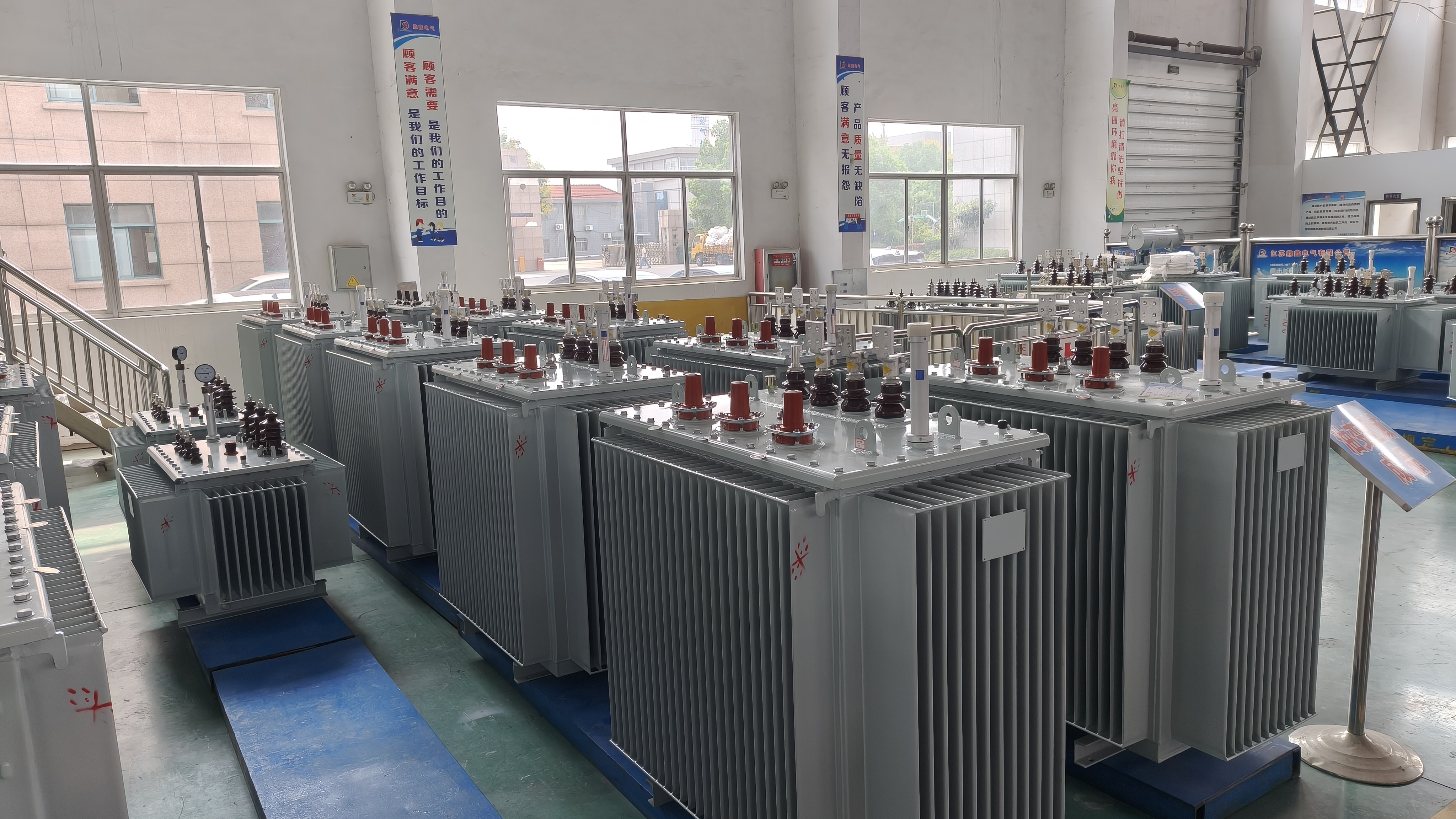
Two transformers with the same rated capacity may have different designs, materials, accessories, performance guarantees, and prices.
For example, a 1000 kVA distribution transformer designed for a 10 kV, 50Hz network may not be directly interchangeable with a transformer designed for a different voltage, frequency, vector group, or impedance requirement.
A complete RFQ helps manufacturers:
Understand the actual project requirements
Select a suitable transformer type
Confirm the electrical configuration
Calculate material and manufacturing costs
Identify special design requirements
Estimate the production and delivery schedule
Reduce repeated technical clarification
First, identify the type of transformer required.
Common options include:
Oil-immersed distribution transformer
Dry-type transformer
Pad-mounted transformer
Pole-mounted transformer
Power transformer
Prefabricated substation transformer
If you are unsure which type is suitable, provide the application and installation environment for the manufacturer's engineering team to review.
Specify the required rated capacity in kVA or MVA.
Examples include:
100 kVA
250 kVA
500 kVA
630 kVA
1000 kVA
1600 kVA
2500 kVA
For projects with multiple units, provide the quantity and capacity of each transformer.
Specify both voltage levels.
For example:
Primary voltage: 10 kV
Secondary voltage: 0.4 kV
Do not provide only the high-voltage rating. The manufacturer needs the complete voltage ratio and any special winding or neutral requirements.
Confirm whether the transformer is designed for:
50Hz or 60Hz
Single-phase or three-phase operation
Frequency and phase configuration are fundamental design parameters.
Specify the required vector group, such as Dyn11 or Yyn0, where applicable.
The vector group affects phase displacement, neutral availability, grounding arrangements, and compatibility with the electrical network.
Provide the required short-circuit impedance if it is defined in the project specification.
Impedance affects voltage regulation, fault-current calculations, and parallel operation.
If the project does not specify an impedance value, provide the system information and ask the manufacturer or electrical designer to confirm a suitable value.
Specify the required tapping range and tap changer type.
For example, the project may require an off-circuit tap changer with a specified voltage adjustment range.
The tap arrangement should be confirmed in the approved technical datasheet.
For oil-immersed transformers, ONAN is a common cooling arrangement.
Dry-type transformers may use natural air cooling or forced-air cooling, depending on the design.
State the required cooling method or provide the project specification.
An accurate RFQ should also include performance requirements.
No-load loss: Specify the maximum permitted no-load loss where required.
Load loss: Provide the guaranteed load-loss limit and the reference temperature or test requirements.
Insulation level: State the required power-frequency and impulse withstand levels.
Temperature rise: Provide the project limits or refer to the applicable standard.
Noise level: Include a maximum sound-level requirement if the installation is noise-sensitive.
Short-circuit withstand: State any project-specific requirements beyond the applicable standard.
These requirements may affect the transformer design, material selection, manufacturing cost, and testing scope.
The transformer manufacturer needs to understand where and how the unit will operate.
Include the following information:
Indoor or outdoor installation
Ambient temperature range
Installation altitude
Relative humidity
Dust and pollution conditions
Coastal or corrosive environment
Seismic requirements, if applicable
Available installation space
Ventilation and cooling conditions
Transportation and access limitations
For high-altitude or extreme-temperature projects, provide the actual site conditions rather than relying on standard service assumptions.
International projects may specify IEC, IEEE, ANSI, or local utility requirements.
Your RFQ should identify the governing standard and edition where known.
It should also state the required inspection and testing scope.
Typical requirements may include:
Routine tests
Type tests
Special tests
Factory Acceptance Test (FAT)
Witness inspection
Third-party inspection
Test reports
Technical drawings
Operation and maintenance manuals
If a project requires a specific certificate or local approval, identify it clearly. A general statement such as "international standards" may not be sufficient for a manufacturer to determine the exact compliance scope.
Technical parameters are only part of a complete RFQ.
Provide the following commercial information:
Order quantity: Number of transformers and ratings.
Destination: Country, city, and destination port where applicable.
Required delivery date: Target shipment or project delivery schedule.
Packaging: Export packaging, moisture protection, and special handling requirements.
Shipping terms: Required Incoterms, such as EXW, FOB, CFR, or CIF, as agreed by the buyer and seller.
Warranty: Required warranty period and coverage.
Spare parts: Any spare parts or special tools required.
After-sales support: Documentation, technical assistance, or installation guidance required by the project.
Use this checklist before sending an inquiry to a transformer manufacturer.
Project name and destination country
Transformer application
Transformer type
Rated capacity
Primary voltage
Secondary voltage
Frequency
Number of phases
Vector group
Percentage impedance
Tap range and tap changer type
Cooling method
No-load and load loss requirements
Insulation level
Ambient temperature and installation altitude
Applicable standards
Required accessories
Inspection and testing requirements
Order quantity
Delivery schedule and destination
If available, attach the following documents:
Technical specification
Single-line diagram (SLD)
Existing transformer nameplate
General arrangement drawing
Project tender documents
Installation photographs
Not every buyer has a complete transformer datasheet at the beginning of a project.
You can still start an inquiry by providing the information available.
For example, send the existing transformer nameplate, project voltage, estimated load, installation location, and application.
The manufacturer can review the available information and identify which parameters still need confirmation.
However, final design approval and production should not proceed until the technical specification has been reviewed and agreed by the relevant parties.
A lower quotation does not always represent an equivalent product.
Price differences may result from:
Different core and winding materials
Different no-load and load loss guarantees
Different impedance requirements
Different insulation levels
Different accessories
Different testing and inspection scopes
Different standards or design requirements
Different packaging and delivery terms
To compare quotations fairly, buyers should use the same technical specification and confirm what is included in each offer.
At minimum, provide transformer type, rated capacity, primary and secondary voltage, frequency, phase configuration, installation location, and quantity. Impedance, vector group, losses, standards, and accessories should also be included when specified.
Yes. Provide the information available, such as a nameplate photo, single-line diagram, or project description. The manufacturer can help identify missing parameters.
The time depends on the completeness and complexity of the RFQ. Standard configurations are generally easier to evaluate than customized designs. Confirm the expected quotation schedule with the manufacturer.
Different materials, loss guarantees, technical configurations, accessories, testing scopes, and delivery terms can lead to different prices.
Customization may be possible depending on the rated capacity, voltage, impedance, environmental conditions, applicable standards, and manufacturing capability.
Jiangsu Dingxin Electric provides transformer solutions for utility distribution, industrial power systems, infrastructure, and renewable energy projects.
To help our team review your requirements, send your technical specification, single-line diagram, existing transformer nameplate, or project details.
Our team can review the required capacity, voltage, impedance, losses, configuration, testing, and delivery conditions.
Contact Dingxin Electric to submit your transformer RFQ and discuss a suitable solution for your project.

Jiangsu Dingxin Electric, a high-tech power equipment manufacturer, produces high-quality transformers and substations, serving global markets across 30+ countries.
Room 118, Building 8, 2999 Hutai Road, Baoshan District, Shanghai, China


Copyright © Jiangsu Dingxin Electric Co., Ltd. All Rights Reserved | Privacy Policy
 EN
