Tel: +86-513-88779999
Email: [email protected]
Tel: +86-513-88779999
Email: [email protected]
As underground power distribution becomes increasingly important in residential communities, commercial developments, and industrial facilities, pad mounted transformers offer a practical solution for safe, reliable, and space-efficient electricity distribution.
A pad mounted transformer is an outdoor distribution transformer installed on a concrete foundation and enclosed in a protective metal cabinet. It is commonly connected to underground power cables and designed to step down medium-voltage electricity to a lower voltage suitable for end users.
Compared with traditional pole-mounted transformers, pad mounted units provide a more integrated installation solution. Their enclosed construction, compartmentalized design, and ground-level installation make them particularly suitable for locations where public safety, equipment accessibility, and visual appearance are important.
At Dingxin Electric, we manufacture customized power distribution transformers for different grid conditions and project requirements. Our pad mounted transformer solutions can be configured according to application scenarios, rated capacity, primary and secondary voltage, cooling requirements, and protection arrangements.
This guide explores the working principles, construction, technical features, applications, and selection considerations of pad mounted transformers, helping electrical engineers, project contractors, and procurement professionals make informed decisions.
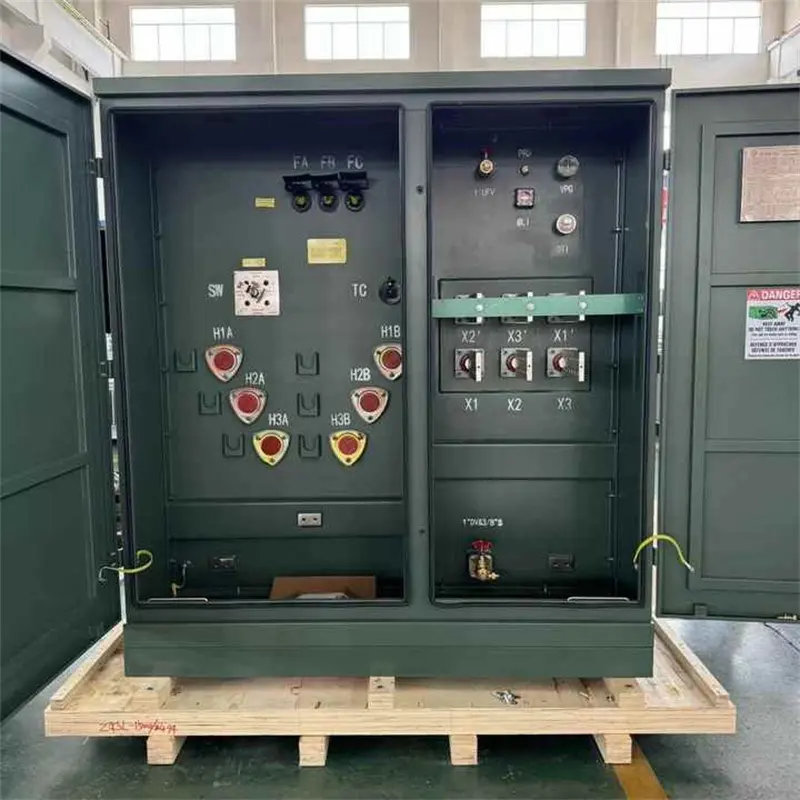
A pad mounted transformer is a ground-mounted electrical distribution transformer designed for outdoor installation. It is typically positioned on a reinforced concrete pad and connected to an underground distribution network.
Its primary function is to reduce medium-voltage electricity to a usable low-voltage level for residential, commercial, or industrial loads.
A typical pad mounted transformer consists of:
Transformer core and windings
Oil-filled tank and cooling system
High-voltage cable compartment
Low-voltage cable compartment
Protective cabinet and locking mechanism
Internal switching and overcurrent protection devices
Grounding and pressure-relief components
The cabinet separates high-voltage and low-voltage connections, helping reduce the risk of accidental contact with energized components.
Depending on the electrical system and project specifications, pad mounted transformers are available in single-phase and three-phase configurations.
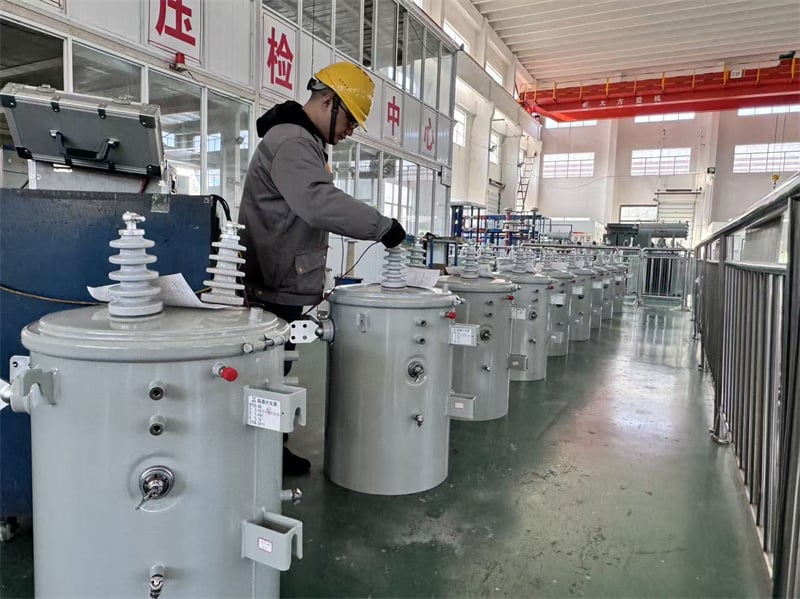
Both configurations are used in underground distribution networks, but their electrical characteristics and typical applications differ.
Single-Phase Pad Mounted Transformer
Single-phase units are commonly used in residential underground distribution systems. They are suitable for supplying individual properties, residential buildings, and smaller electrical loads.
Typical considerations include:
Compact installation footprint
Residential load distribution
Compatibility with underground secondary networks
Flexible primary and secondary voltage configurations
Outdoor installation with enclosed protection
Three-Phase Pad Mounted Transformer
Three-phase units are designed for applications requiring balanced three-phase power distribution. They are widely used in commercial buildings, industrial facilities, apartment complexes, and infrastructure projects.
Their advantages include:
Support for three-phase electrical loads
Integration with commercial and industrial distribution networks
Flexible voltage and capacity configurations
Options for different switching and protection arrangements
Suitability for higher-power distribution requirements
The appropriate configuration depends on the utility network, connected load, and project design.
The construction of a pad mounted transformer is designed to balance electrical performance, outdoor durability, operational safety, and maintenance accessibility.
Unlike pole-mounted transformers, pad mounted transformers are installed at ground level inside a protective enclosure.
The cabinet typically features a low-profile structure with separate compartments for high-voltage and low-voltage connections.
This arrangement provides several practical benefits:
Space-efficient installation: Suitable for residential communities, commercial developments, and locations with underground electrical infrastructure.
Improved accessibility: Ground-level positioning allows authorized technicians to inspect and maintain equipment without working at height.
Environmental protection: The enclosure helps protect internal electrical components against rain, dust, and other external conditions.
Improved site appearance: The enclosed design can be integrated into landscaped areas and building developments.
Cabinet material, coating, locking arrangements, and enclosure protection should be selected according to the installation environment and applicable utility requirements.
The transformer core and windings determine its electrical conversion performance and contribute significantly to operating efficiency.
The magnetic core provides the path for magnetic flux, while the primary and secondary windings perform voltage transformation through electromagnetic induction.
Core material, winding conductor selection, insulation systems, and manufacturing processes all influence:
No-load losses
Load losses
Temperature rise
Short-circuit withstand capability
Long-term operational reliability
For distribution projects, these parameters should be evaluated against the required efficiency level, loading profile, and applicable technical standards.
Many pad mounted transformers use an oil-immersed design.
Transformer oil serves two important functions: insulating internal electrical components and transferring heat generated by the core and windings to the tank surface.
Depending on the transformer design, heat is dissipated through the tank and external cooling surfaces.
The main benefits include:
Effective heat transfer
Electrical insulation between internal components
A relatively compact transformer structure
No requirement for a separate external cooling system in conventional natural-cooling designs
Cooling arrangements and insulating fluid selection should be determined by transformer capacity, environmental conditions, fire-safety requirements, and project specifications.
Safety is a critical consideration for pad mounted transformers because they are frequently installed in accessible outdoor locations.
A properly engineered design combines cabinet protection, electrical isolation, overcurrent protection, and pressure management.
Separate high-voltage and low-voltage compartments help organize cable connections and reduce the possibility of unauthorized access to energized parts.
The compartment arrangement also makes inspection and maintenance procedures more systematic.
Pad mounted transformers can be equipped with different protective devices depending on the distribution system.
Common options include:
Bayonet fuses
Current-limiting fuses
High-voltage load-break switches
Internal protective switching arrangements
Fuse selection should consider transformer rated capacity, inrush current, fault levels, coordination with upstream protection, and utility requirements.
During abnormal operating conditions, internal pressure may increase.
Pressure-relief devices are designed to release excessive internal pressure within their specified operating conditions, helping protect the transformer tank.
Tank construction, sealing arrangements, corrosion-resistant coatings, and suitable enclosure protection also contribute to outdoor operational reliability.
Grounding is essential for electrical safety.
The transformer tank and cabinet should be connected to the project grounding system according to applicable electrical codes and utility specifications.
Lockable cabinet doors and controlled access arrangements help prevent unauthorized interference with internal components.
For public-facing installations, the overall equipment layout should also consider clearances, access restrictions, and local electrical safety requirements.
Single-phase pad mounted transformers are widely used in residential underground distribution networks.
The reference technical range in the original material includes:
| Parameter | Reference Range |
|---|---|
| Rated capacity | 10–167 kVA |
| Maximum primary voltage mentioned | Up to 34.5 kV |
| Primary voltage examples | 2,400–19,920 V |
| Secondary voltage examples | 120–600 V |
| Cooling method | Oil-immersed |
| Installation | Outdoor, concrete pad-mounted |
These figures describe the reference single-phase transformer range and should not be interpreted as universal specifications for every pad mounted transformer.
Actual ratings depend on the distribution network, transformer design, local utility standards, and project requirements.
For three-phase pad mounted transformers, rated capacity and voltage configurations should be selected independently according to the intended application.
When preparing a transformer specification, buyers and engineering contractors should identify:
Rated capacity (kVA)
Primary voltage and insulation level
Secondary voltage
Single-phase or three-phase configuration
Frequency (50 Hz or 60 Hz)
Vector group, where applicable
Cooling method
Impedance and temperature-rise requirements
No-load and load-loss requirements
Required protection and switching accessories
Applicable standards and testing requirements
Installation and environmental conditions
A complete technical specification helps manufacturers develop a suitable transformer configuration and reduces the risk of design mismatches during installation.
Pad mounted transformers are particularly suitable for electrical distribution systems using underground cables.
Their enclosed structure and ground-level installation make them useful across several infrastructure sectors.
Residential underground distribution networks are one of the most common applications for single-phase pad mounted transformers.
They help supply electricity to houses, residential buildings, and neighborhood distribution systems.
Their compact cabinet design is particularly useful in developments where overhead power lines are restricted or where maintaining a clean streetscape is important.
Typical applications include:
Residential subdivisions
Detached housing developments
Apartment communities
Urban redevelopment projects
Underground residential distribution networks
Commercial facilities require reliable power distribution for lighting, HVAC systems, elevators, office equipment, and other electrical loads.
Three-phase pad mounted transformers can be integrated into underground distribution networks serving:
Shopping centers
Office buildings
Hotels
Hospitals
Schools and educational facilities
Public infrastructure developments
The transformer capacity and protection configuration should be determined by the facility's demand profile and load characteristics.
Industrial facilities often contain motors, production equipment, distribution panels, and other three-phase electrical loads.
Pad mounted transformers can serve as part of the site's medium-voltage-to-low-voltage distribution infrastructure.
For these applications, engineers should pay particular attention to:
Maximum demand and load diversity
Motor starting and transient loads
Harmonic considerations
Short-circuit levels
Protection coordination
Future capacity expansion
A properly selected transformer helps establish a suitable electrical supply for industrial operations.
Renewable energy installations are creating additional demand for customized distribution and power conversion equipment.
Pad mounted transformers may be incorporated into solar PV and battery energy storage projects as part of the medium-voltage distribution and interconnection infrastructure.
Depending on the system architecture, transformer configurations may need to accommodate:
Bidirectional power flow
Inverter output voltage
Grid connection requirements
Load and generation fluctuations
Protection coordination
Thermal operating conditions
For BESS and grid-connected renewable projects, engineers should carefully evaluate transformer duty, impedance, insulation, voltage regulation, and protection requirements.
The final configuration must be coordinated with the inverter, switchgear, and utility interconnection design.
Choosing between pad mounted and pole mounted transformers depends on the distribution network, installation environment, load requirements, and project budget.
| Comparison | Pad Mounted Transformer | Pole Mounted Transformer |
|---|---|---|
| Installation | Concrete foundation at ground level | Mounted on utility poles |
| Cable connection | Commonly underground | Commonly overhead |
| Cabinet | Enclosed protective cabinet | Typically exposed installation |
| Site appearance | Low-profile ground-level design | Visible elevated equipment |
| Maintenance access | Ground-level access for authorized technicians | Requires elevated access equipment |
| Typical applications | Residential subdivisions, commercial and industrial developments | Overhead distribution networks and rural power supply |
| Infrastructure requirements | Concrete pad and underground cable connections | Suitable poles and overhead line infrastructure |
Which type should you choose?
Pad mounted transformers are generally preferable when a project uses underground distribution, requires enclosed ground-level equipment, or places greater emphasis on site appearance.
Pole mounted transformers may be more economical for distribution networks that already use overhead lines and suitable utility poles.
The decision should be based on the complete distribution system rather than the transformer alone.
Different distribution projects have different electrical and environmental requirements. A standardized transformer configuration may not be suitable for every installation.
Dingxin Electric provides customized transformer manufacturing solutions based on customer drawings, technical specifications, and project conditions.
Depending on the design and application, available configuration options may include:
| Customization Item | Engineering Considerations |
|---|---|
| Rated capacity | Selected according to connected load and future demand |
| Primary voltage | Matched to the local medium-voltage distribution network |
| Secondary voltage | Designed for downstream electrical equipment |
| Phase configuration | Single-phase or three-phase |
| Frequency | 50 Hz or 60 Hz |
| Cooling and insulation | Selected according to thermal and operating requirements |
| Switching devices | Configured according to the protection scheme |
| Fuse arrangements | Selected for fault protection and coordination |
| Cabinet design | Adapted to installation conditions and utility requirements |
| Surface coating | Selected according to the outdoor environment |
| Accessories | Configured according to project specifications |
For North American projects, for example, transformer design may need to follow applicable IEEE/ANSI requirements and local utility specifications. Other international projects may require IEC-based configurations.
Standards should be confirmed during the technical review rather than assumed to be interchangeable.
The performance of a pad mounted transformer depends not only on its design but also on material quality, manufacturing consistency, assembly accuracy, and inspection procedures.
A structured quality-control process should cover the complete production cycle.
The transformer core and winding assemblies should be inspected for dimensional accuracy, material condition, winding arrangement, and insulation integrity.
Correct assembly is important for achieving the required electrical and thermal performance.
Routine electrical tests help verify whether the manufactured transformer meets its specified requirements.
Depending on the transformer design and applicable standards, testing may include:
Winding resistance measurement
Voltage ratio verification
Polarity and phase relationship checks
No-load loss and excitation current measurement
Load loss and impedance measurement
Applied voltage withstand test
Induced voltage withstand test
Insulation-related checks
The exact test program should follow the applicable product standard and approved technical specification.
Before shipment, the transformer should undergo a final inspection covering its external appearance, cabinet structure, nameplate information, accessories, terminal arrangements, and packaging condition.
For export projects, clear technical documentation and appropriate shipping protection are also important for smooth delivery and installation.
Dingxin Electric focuses on transformer manufacturing and customized power distribution solutions for international customers, with technical configurations developed according to project requirements.
Selecting a suitable transformer manufacturer is an important part of project procurement.
Beyond comparing quotations, buyers should evaluate the supplier's engineering capability, production experience, quality-control procedures, and ability to support customized orders.
Consider the following factors:
1. Manufacturing Capability
Check whether the supplier has the facilities and production processes required for the specified transformer type, voltage level, and capacity.
2. Technical Customization
A capable manufacturer should be able to review electrical specifications and coordinate key design parameters before production.
3. Quality Control and Testing
Ask for information about routine testing, inspection procedures, and relevant test documentation.
4. Standards and Market Requirements
Confirm whether the transformer can be designed to meet the applicable IEC, IEEE/ANSI, or other project-specific requirements.
5. Export and Project Experience
For international procurement, consider packaging, shipping arrangements, technical communication, documentation, and after-sales support.
6. Long-Term Supply Capability
For distributors, EPC contractors, and utility projects, stable manufacturing capacity and consistent product specifications are important for long-term cooperation.
Dingxin Electric works with international customers on transformer supply and OEM/ODM customization, supporting different power distribution applications and project specifications.
Pad mounted transformers play an important role in modern underground power distribution systems. Their enclosed construction, flexible electrical configurations, and ground-level installation make them suitable for residential, commercial, industrial, and renewable energy infrastructure.
Selecting the right unit requires more than choosing a rated kVA value. Engineers and procurement teams should consider voltage configuration, phase arrangement, cooling, insulation, protection coordination, environmental conditions, applicable standards, and future load requirements.
Dingxin Electric is a transformer manufacturer specializing in power distribution equipment, providing customized solutions for international power projects.
Whether you are sourcing a single-phase pad mounted transformer for residential distribution or a three-phase transformer for a commercial, industrial, or renewable energy project, Dingxin can work with your technical specifications to develop a suitable solution.
Contact Dingxin Electric to discuss your transformer requirements, request technical information, and explore OEM/ODM manufacturing options.
A pad mounted transformer reduces medium-voltage electricity to a lower voltage for distribution to residential, commercial, or industrial users. It is commonly installed outdoors on a concrete pad and connected to underground distribution cables.
Single-phase pad mounted transformers are commonly used for residential distribution and smaller electrical loads. Three-phase units are generally used for commercial buildings, industrial facilities, and applications requiring three-phase power.
Many conventional pad mounted transformers use oil-immersed construction. Transformer oil provides both electrical insulation and heat transfer. The specific insulating fluid and cooling arrangement depend on the transformer design and project requirements.
Typical installation locations include residential subdivisions, apartment communities, commercial buildings, industrial parks, hospitals, shopping centers, and renewable energy projects with underground distribution infrastructure.
The reference range in this guide is 10 kVA to 167 kVA. Actual capacity availability depends on the manufacturer, distribution system, voltage configuration, and project specification.
Depending on the design, protection options may include bayonet fuses, current-limiting fuses, load-break switches, and pressure-relief devices. The final arrangement should be coordinated with the distribution system's protection requirements.
A pad mounted transformer is installed at ground level inside an enclosed cabinet and is commonly connected to underground cables. A pole mounted transformer is installed on a utility pole and is generally used in overhead distribution networks.
Yes. Dingxin Electric supports transformer customization according to project requirements, including rated capacity, primary and secondary voltage, phase configuration, frequency, protection arrangements, and other technical specifications. Customers can provide drawings or technical requirements for evaluation.
Applicable standards depend on the destination market and utility requirements. IEC and IEEE/ANSI are commonly referenced in international transformer projects. Buyers should confirm the exact standard, test requirements, and utility specifications before ordering.

Jiangsu Dingxin Electric, a high-tech power equipment manufacturer, produces high-quality transformers and substations, serving global markets across 30+ countries.
Room 118, Building 8, 2999 Hutai Road, Baoshan District, Shanghai, China


Copyright © Jiangsu Dingxin Electric Co., Ltd. All Rights Reserved | Privacy Policy
 EN
